

Integrative Psychiatry vs. Traditional Psychiatry - Understanding the Whole-Person Approach
- Jun 24, 2026
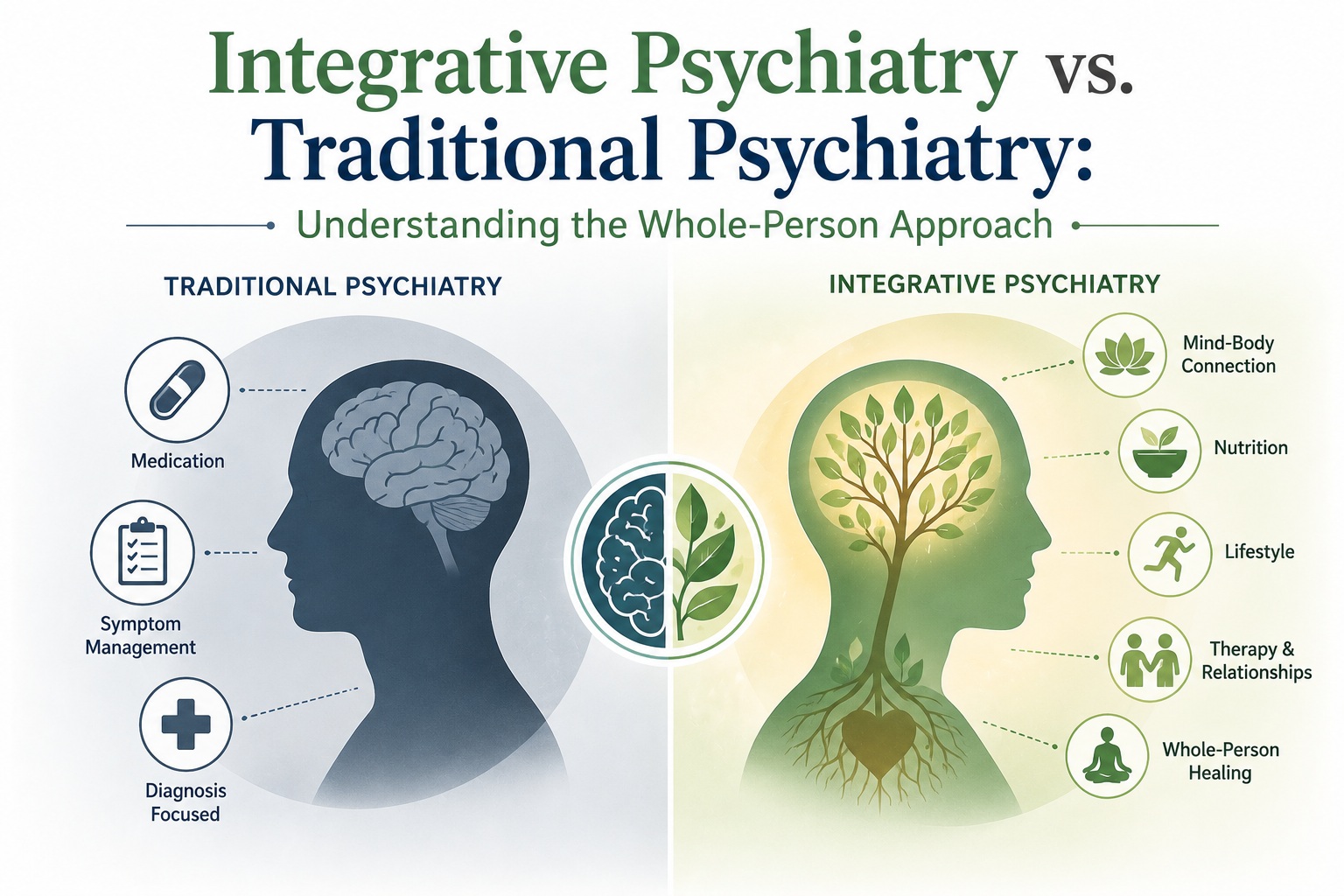 When you're struggling with anxiety, depression, or emotional stress, finding the right kind of help is everything. You've probably heard of traditional psychiatry, the kind that involves medication and talk therapy. But there's a growing approach called integrative psychiatry that's changing how many people think about mental health care.
So, what is the difference? And which one might be right for you?
What Is Traditional Psychiatry?
Traditional psychiatry is a medical specialty focused on diagnosing and treating mental health conditions. It is well-established, scientifically grounded, and widely available. It is highly effective for many conditions, especially when medication is necessary.
However, it often focuses on managing symptoms rather than exploring deeper causes,like emotional history, lifestyle, nutrition, or spiritual well-being.
What Is Integrative Psychiatry?
Integrative psychiatry takes everything that works in traditional psychiatry and adds a broader, whole-person lens. It looks at you not just as a set of symptoms, but as a complete human being, with a body, mind, emotions, and spirit that are all connected.
The goal isn't just to feel less bad but to feel genuinely well, and to understand yourself more deeply in the process.
Also Read: How Integrative Psychiatry is Changing the Conversation about Mental Health Treatment
Side-by-Side Comparison
Here's a quick look at how the two approaches differ:
|
Traditional Psychiatry |
Integrative Psychiatry |
|
|
Focus |
Symptoms and diagnosis |
Whole person: mind, body, spirit |
|
Treatment Tools |
Medication, talk therapy |
Medication + nutrition, homeopathy, mindfulness, energy medicine |
|
Root Cause |
Biological/chemical imbalance |
Emotional, biological, social, and spiritual factors |
|
Care Plan |
Standardized protocols |
Fully personalized to the individual |
|
Goal |
Symptom relief |
Lasting wellness and personal growth |
Who Is Integrative Psychiatry For?
Integrative psychiatry is a strong fit for people who:
- Want to understand the root causes of their mental health challenges, not just manage symptoms
- Are open to combining conventional medicine with natural approaches
- Have tried traditional treatment but feel something is still missing
- Are navigating depression, anxiety, trauma, hormonal changes, or chronic stress
- Are interested in personal growth alongside clinical care
A Different Way to Heal
Mental health care doesn't have to be one-size-fits-all. Integrative psychiatry offers a path that honors both the science of medicine and the complexity of being human. Whether you're managing a diagnosed condition or simply looking to feel more balanced and whole, the whole-person approach may open doors that traditional care alone hasn't.
Frequently Asked Questions –H2
1. What is the main difference between integrative psychiatry and traditional psychiatry?
Traditional psychiatry primarily focuses on diagnosing mental health conditions and treating symptoms through medication and therapy. Integrative psychiatry includes these approaches while also considering nutrition, lifestyle, emotional health, and overall well-being.
2. Can integrative psychiatry include medication when needed?
Yes. Integrative psychiatry does not replace conventional treatment. It may include medications when appropriate while also incorporating complementary approaches such as mindfulness, nutrition, and lifestyle support.
3. Who may benefit from integrative psychiatry?
Integrative psychiatry may be helpful for individuals dealing with anxiety, depression, trauma, chronic stress, or emotional challenges who want a more personalized and comprehensive approach to care.
4. Does integrative psychiatry focus on the root cause of mental health concerns?
Yes. One of its goals is to explore contributing factors such as stress, lifestyle habits, nutrition, emotional experiences, and overall health rather than focusing only on symptom management.
5. Is integrative psychiatry supported by medical professionals?
Yes. Integrative psychiatry is typically provided by qualified mental health professionals who combine evidence-based psychiatric care with additional therapies tailored to each individual's needs and goals.
6. How do I know whether integrative psychiatry is right for me?
If you are looking for a treatment approach that addresses both mental health symptoms and broader factors affecting your well-being, a consultation with an integrative psychiatry specialist can help determine the most suitable care plan.