

A Holistic Path to Healing and Renewal in Addiction & Co-dependency
- Sep 21, 2026
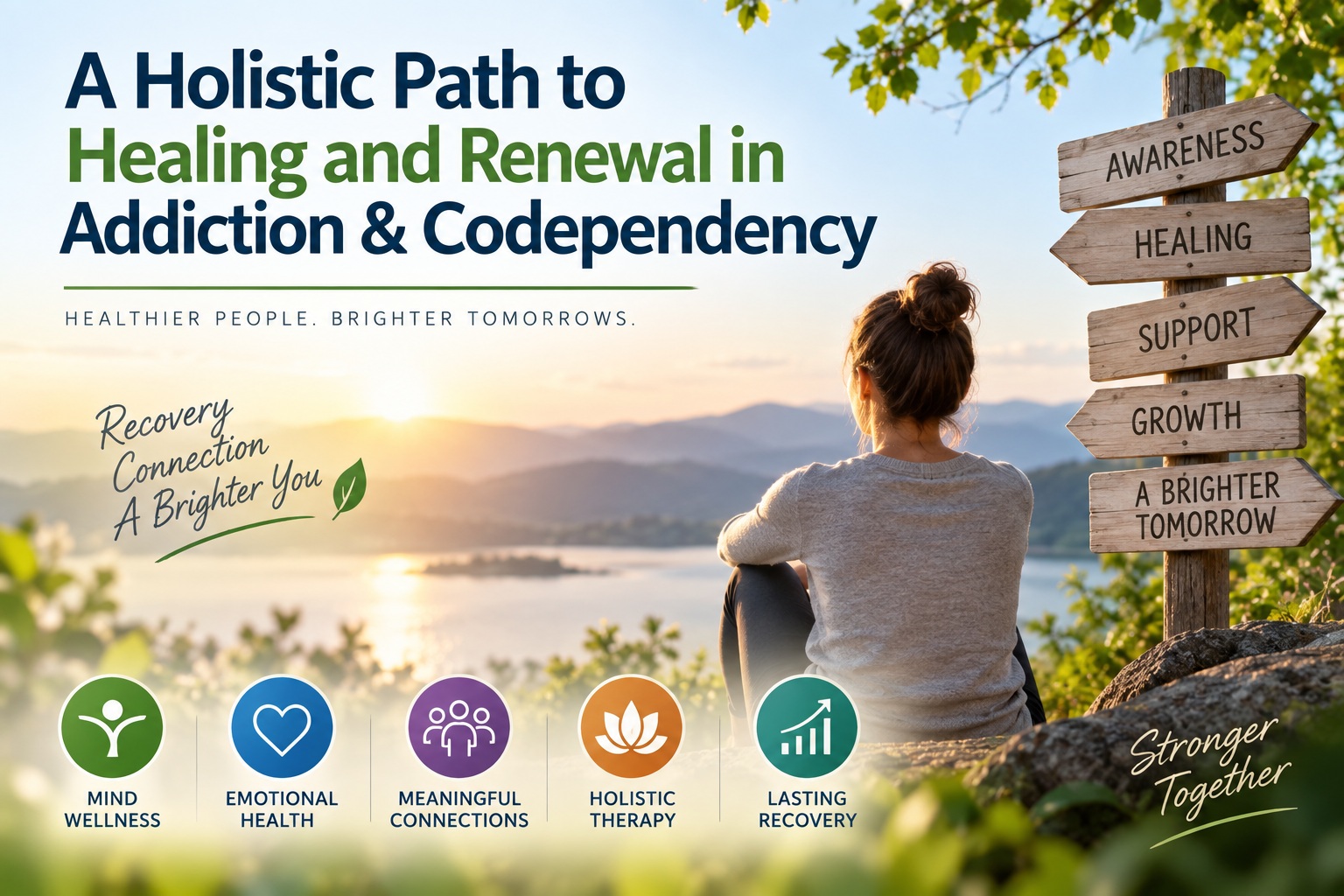 Addiction rarely happens in isolation. It grows inside relationships, family patterns, and emotional wounds that often go unseen. One of the most overlooked pieces of this puzzle is co-dependency: a dynamic where one person's sense of identity and self-worth becomes tangled up in caring for, controlling, or enabling another. Understanding this connection is often the first real step toward lasting recovery.
What Co-dependency Looks Like
Co-dependency shows up in many forms, not just in romantic relationships. It can appear between parents and children, siblings, friends, or coworkers. Common signs include:
- Feeling responsible for another person's feelings or choices
- Difficulty saying no, even when it causes personal harm
- Basing self-worth on being needed
- Ignoring your own needs to keep the peace
- Covering up or excusing a loved one's harmful behavior
When left unaddressed, these patterns can quietly fuel addiction cycles. The person struggling with substance use may feel less pressure to change because someone else keeps absorbing the consequences.
Why a Whole-Person Approach Matters
Traditional treatment models often focus narrowly on the addictive behavior itself. A holistic approach looks wider. It considers the mind, body, and spirit together, recognizing that unresolved trauma, chronic stress, and disrupted body chemistry all play a role in both addiction and co-dependency.
An integrative approach may combine:
|
Area of Focus |
What It Addresses |
|---|---|
|
Emotional patterns, trauma, boundaries |
|
|
Homeopathy |
Whole-person symptom picture, underlying constitution |
|
Nutritional support |
Physical stability, mood regulation, energy |
|
Mind-body practices |
Nervous system regulation, stress response |
|
Family or relational work |
Communication patterns, healthy boundaries |
This kind of layered care does not replace conventional treatment. It works alongside it, filling gaps that a single-modality approach can miss.
Also Read: Understanding Co-Dependency in Addiction Recovery
Breaking the Cycle
- Awareness is the starting point.
- Rebuilding boundaries.
- Separate care from control so both people can grow.
- Reconnect with the body.
- Use somatic and mind-body work to release stored anxiety and tension.
- Rebuild an identity that does not depend on someone else's crisis.
A Path Toward Renewal
If you or someone you love is caught in the cycle of addiction and co-dependency, support that treats the whole person, not just the symptom, can make all the difference.
Want to talk it through? Call 408-741-1332 or email skamiak@aol.com to chat about what support could look like for you or someone you love.
Frequently Asked Questions
1. What is the connection between addiction and co-dependency?
Addiction and co-dependency can become closely connected when one person’s addictive behaviour affects the relationship and another person becomes focused on controlling, rescuing, or enabling them.
2. What are the common signs of co-dependency in relationships?
Common signs include difficulty saying no, feeling responsible for another person’s emotions, ignoring your own needs, needing to feel needed, and covering up or excusing harmful behaviour.
3. Can co-dependency contribute to addiction recovery challenges?
Yes. Codependent patterns can make it difficult to establish healthy boundaries and may unintentionally reinforce addictive behaviours. Addressing these patterns can support a more sustainable recovery process.
4. What does a holistic approach to addiction and co-dependency include?
A holistic approach may combine psychotherapy, counselling, nutritional support, mind-body practices, and family or relational work while complementing appropriate conventional addiction treatment.
5. How can someone break the cycle of co-dependency and addiction?
Breaking the cycle starts with recognising unhealthy patterns, setting boundaries, separating care from control, addressing emotional wounds, reconnecting with personal needs, and developing an identity beyond another person’s crisis.
6. Where can I find support for addiction and co-dependency recovery?
Professional addiction and co-dependency support can help address emotional patterns, relationships, boundaries, and whole-person wellbeing as part of a personalised recovery approach.