

Psychosynthesis As a Complement to Homeopathy and Nutrition
- Aug 18, 2026
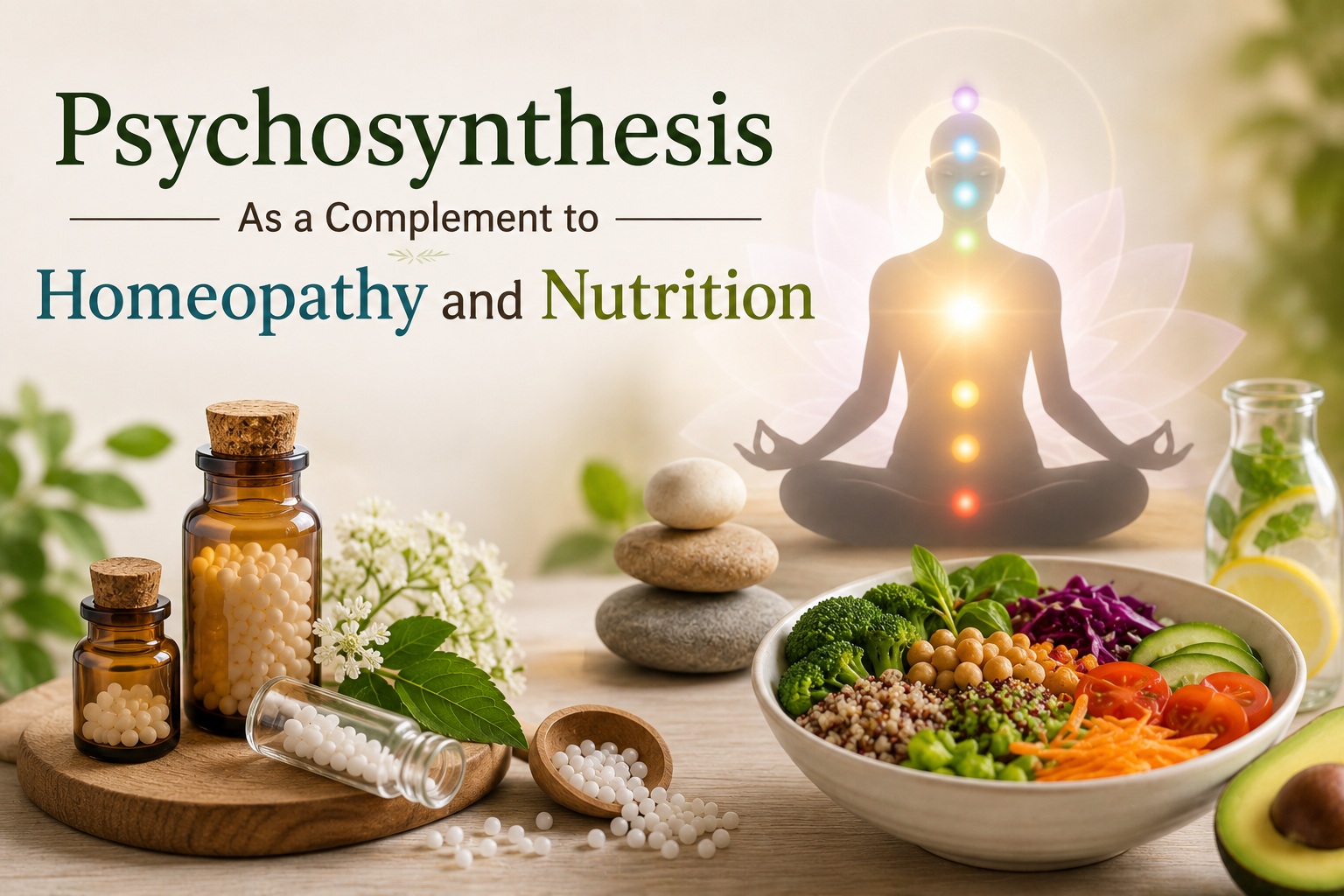 True healing rarely comes from treating one part of a person at a time. Real progress often comes from combining a few different tools that each address a different layer of well-being. Psychosynthesis, homeopathy, and nutrition are three such tools. Each one works in its own way, but together they support the same goal: helping the person feel balanced, resilient, and well.
What Each Approach Brings to the Table
|
Approach |
Primary Focus |
What It Supports |
Description |
|
Psychosynthesis |
Mind & spirit |
Emotional processing, self-awareness, inner resilience |
Works with the mind and spirit. Helps people process emotions, understand old patterns, and reconnect with a steadier, more authentic sense of self. |
|
Homeopathy |
Whole-body balance |
Physical symptoms often tied to stress or emotional strain |
Uses gentle, individualized remedies matched to a person's specific physical and emotional symptoms, supporting the body's own ability to restore balance. |
|
Nutrition |
Biochemistry |
Steady energy, mood stability, clear thinking |
Provides the raw materials the brain and body run on, steady energy, stable blood sugar, and the nutrients needed for mood and focus. |
Also Read: Psychosynthesis Therapy: A Holistic Approach to Mental and Spiritual Wellness
Why Integration Matters
None of these three approaches works in isolation, because the mind and body are never truly separate. When working through a difficult period with psychosynthesis, a nutrient-dense diet can give the body the energy it needs to do that inner work. At the same time, a well-matched homeopathic remedy may ease physical symptoms, like fatigue or restlessness, that would otherwise get in the way of emotional healing. Addressing all three layers at once tends to produce steadier, longer-lasting results than addressing any one of them alone.
What Combined Care Can Look Like
- Time spent identifying emotional patterns, stuck points, or limiting beliefs
- A homeopathic remedy selected to match both physical and emotional symptoms
- Practical, realistic adjustments to daily eating habits
- Regular check-ins to track shifts in mood, energy, and physical health over time
Healing that considers the mind, body, and spirit together tends to hold up better over time than healing that treats each piece as a separate problem. When emotional support, gentle physical remedies, and solid nutrition work together, people may notice improvements not only in their physical well-being but also in their clarity of thought and emotional balance.
Frequently Asked Questions
1. How can psychosynthesis complement homeopathy and nutrition?
Psychosynthesis focuses on emotional processing, self-awareness, and inner resilience, while homeopathy and nutrition address other aspects of physical well-being. Combining these approaches creates a broader, individualized wellness framework.
2. What role does nutrition play alongside psychosynthesis?
Nutrition provides the nutrients the brain and body need for energy, mood, and focus. A nutrient-dense diet can support overall well-being while a person works through emotional patterns and personal challenges.
3. Can homeopathy and psychosynthesis be used together?
They can be incorporated into a broader complementary care approach. Psychosynthesis focuses on emotional and psychological patterns, while individualized homeopathic care may address physical and emotional symptoms.
4. What does combine psychosynthesis, homeopathy, and nutrition care involve?
Combined care may include exploring emotional patterns, using an individualized homeopathic approach, making practical dietary changes, and having regular check-ins to assess changes in mood, energy, and physical well-being.
5. Why is a whole-person approach important for well-being?
A whole-person approach recognises that emotional well-being, physical health, and nutrition can influence one another. Addressing these areas together may provide a more comprehensive approach than focusing on only one aspect of health.
6. Is this approach suitable for everyone?
Individual needs vary, so a combined approach should be personalized rather than treated as a one-size-fits-all solution. Appropriate care should be discussed with a qualified healthcare professional.