

Extending Codependency Recovery to Heal the Family System
- Nov 24, 2026
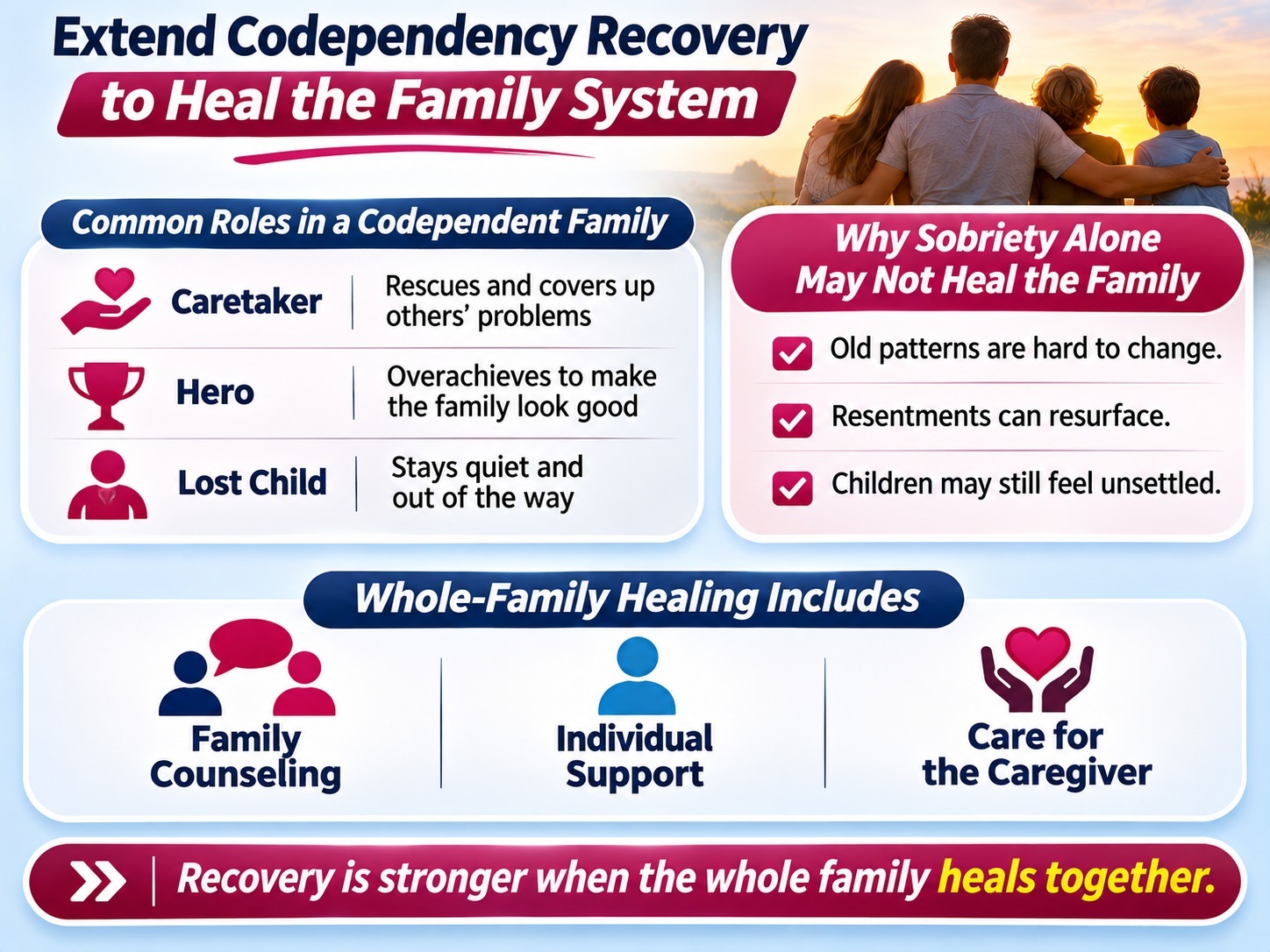 When someone gets sober, families often expect life at home to snap back to normal. It rarely does. That’s because addiction doesn’t just affect the person struggling with it; it also impacts the people around them. Real codependency recovery reaches the whole family system, not just one member.
Common Roles in a Codependent Family
In families, when addiction pulls hard on one member, the rest shift their weight to keep the whole thing from tipping over. Many families slip into familiar roles without realizing it.
|
Role |
How It Shows Up |
A Healthier Way Forward |
|
Caretaker |
Rescues, covers up, and takes on others' problems |
Sets healthy limits and lets others own their choices |
|
Hero |
Overachieves to make the family look good |
Finds self-worth beyond performance |
|
Scapegoat |
Acts out and draws attention away from the real issue |
Feels heard and expresses pain in healthy ways |
|
Lost Child |
Stays quiet, invisible, and out of the way |
Learns that their needs and voice matter |
|
Mascot |
Uses humor to ease tension |
Feels safe sharing real emotions |
These roles help people cope, but they also keep the cycle going.
Why Sobriety Alone Does Not Heal a Family
Many families are surprised when problems continue even after the person in recovery stops using substances. A few common reasons:
- The caretaker does not know how to stop managing everything.
- Old resentments surface once the crisis quiets down.
- Children still brace for things to fall apart again.
- The newly sober person feels watched, judged, or shut out.
None of this means recovery has failed. It simply means the rest of the family has its own healing to do.
Also Read: How Nutrition Supports Addiction Recovery and Healing
What Whole-Family Healing Looks Like
Healing from addiction is not just an individual journey; it involves the entire family. When care extends to the family system, each person gets the space and support they need to heal, both together and independently. This support can take several forms:
- Family counseling brings everyone into the same room to name the patterns, rebuild trust, and practice new ways of talking.
- Individual counseling helps each member understand the role they have been playing and who they are outside of it.
- Support for children gives young people age-appropriate ways to make sense of what happened and to know it was never their fault.
- Peer support groups such as Al-Anon, Alateen, and Co-Dependents Anonymous connect family members with others who understand.
- Caring for the caregiver addresses the exhaustion, stress, and broken sleep that often build up in the person who held everything together.
Moving Forward Together
Codependency recovery becomes stronger and longer-lasting when it reaches beyond one person. Addiction and its recovery reshape how everyone at home talks, copes, and connects. With counseling and the right support, households can find a healthier balance together.
Frequently Asked Questions
1. Why does addiction affect the entire family system?
Addiction can affect family communication, trust, emotional well-being, and daily responsibilities. Family members may develop coping behaviors, such as rescuing, avoiding conflict, or taking on excessive responsibility, that continue even after substance use stops.
2. What are common roles in a codependent family?
Commonly described roles include the caretaker, hero, scapegoat, lost child, and mascot. These are general patterns rather than clinical diagnoses, and one person may take on more than one role.
3. Why does family healing matter after someone becomes sober?
Sobriety addresses substance use, but it does not automatically resolve family conflict, emotional distress, broken trust, or unhealthy relationship patterns. Family support can help everyone adjust and rebuild healthier connections.
4. How does family counseling help with co-dependency recovery?
Family counseling helps members recognize unhealthy patterns, communicate more openly, establish boundaries, and rebuild trust. It also provides a structured space to address unresolved family concerns.
5. How can children be supported when a parent is recovering from addiction?
Children benefit from age-appropriate conversations, emotional reassurance, consistent routines, and access to counselling when needed. They should understand that the addiction is not their fault and that their feelings matter.
6. How can family members set healthy boundaries during addiction recovery?
Family members can establish clear limits around responsibilities, communication, finances, and personal well-being. Healthy boundaries allow individuals to offer support without taking responsibility for another person's recovery.
7. Can individual therapy and family therapy work together during co-dependency recovery?
Yes. Individual therapy helps each person address personal experiences and emotional needs, while family therapy focuses on relationship patterns and communication. Both approaches can complement each other as part of a recovery plan.